
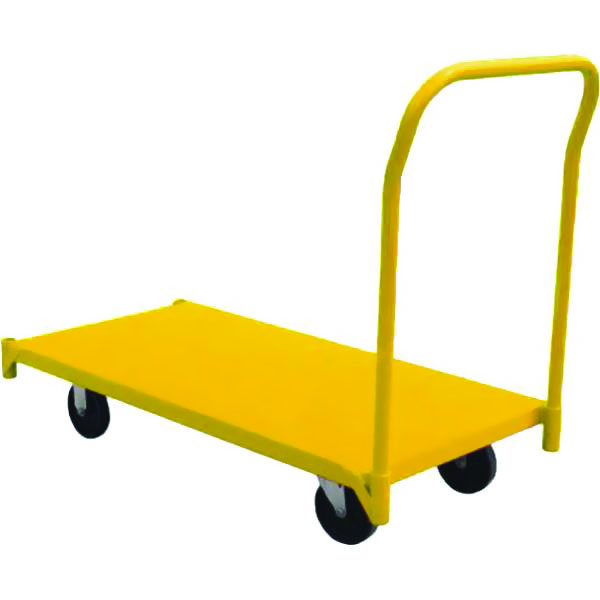
An operation with equipment that can endure the daily grind while still rolling on is a successful operation, and that is especially true in the world of material handling. At the centre of that workload are industrial platform trolleys, connecting production lines, storage aisles, and outbound docks. By investing in a trolley that is built to last, businesses will not only benefit from a solution to transport goods, but also from a reliable partner that will ensure product integrity, increase uptime, and take care of employee wellbeing.
Purpose built trolleys eliminate the niggling doubts that result from lesser designs – flat tyres, cracked decks, wonky wheels – and replace it with certainty. Confidence means continuity, humility and integrity all amount to continuity, and continuity underwrites profitability as they say in a competitive economy like Australia. Strong and sturdy platform trolley work behind the scenes, from the factories on the outskirts of Melbourne to logistics hubs strewn across Western Sydney — the linchpin of operational resilience.
The Industrial Scene and Why You Need To Prioritize Durability
Australian industry is extreme — blistering summer heat in remote mining locations, coastal air that invites fast corrosion, and lumpy warehouse floors that endure consistent cycles of hard-used forklifts. In these circumstances, any slight weakness in the trolley frame, welds, or running gear is mercilessly shown. Cheap sheet metal trays deflect under concentrated loads, castors buckle and skate over sealed concrete, bearings grind to a halt when dust invades the races. So durability isn’t a premium feature, but the minimum standard for handling equipment to be able to make it past the first quarter. A durable cart trolley has to be able to withstand Trolley Mechanical stress, Mechanical stress, Trolley, Trolley Chemical spill exposure, Thermal variation exposure, Trolley sudden shocks delivered by accidental collisions. It is that resilience that allows supervisors to rest assured their assets will roll true for decades and keeps procurement managers from having to run on the constant replacement capital expense treadmill.
Materials and Construction Methods for Engineering Durability
Longevity begins with steel. The use of high-tensile tube or RHS (rectangular hollow section) gives a stiff but relatively light chassis, and the all-welded construction removes the bolt-loosening fatigue often associated with knock-down models Experienced fabricators understand that a continuous MIG weld along a stress point disperses the load much more effectively than an intermittent stitch weld, and that the fillet size must be sized based upon maximum allowable working load, rather than on appearance. It cures powder-coat finishes at temperatures higher than two hundred degrees Celsius, hardening into a skin that chips and resists UV degradation better than wet paint. In situations where cleaning chemicals or brine is involved, hot-dip galvanising or full stainless-steel construction provides decades of protection. Hydraulically-pressed decks with slightly folded edges helps add torsional rigidity so that the platform stays flat even when the weight of the cargo is oriented towards one side. Decisions like this are never arbitrary — being the first push of a trolley felt reassuringly solid or worryingly flimsy.
Creating features that power up individual shifts
A well-designed industrial platform trolley from equip2go keeps carrying mass, but in turn accelerates workflow. Strain across the shoulders and upper back is also avoided with ergonomic push handles that are naturally positioned at elbow height, allowing operators to keep their pace without fatigue. The precision-swivel front castors paired with a set of fixed rear wheels also help provide a predictable steering arc, letting the tray track true down narrow racking corridors. Coatings and low roll resistance tick over silently as bearings gush their high-performance grease over polished concrete, and broad tread contact patches are packaged to spread the weight and preserve the floor coating below. Suspension types include passive, active, semi-active, or a combination of the three, and working principles may be pneumatic, visual, or mechanical. Anti-slip deck surfaces help prevent odd-shaped cartons from sliding as the trolley turns, thus avoiding product damage—and potentially damaging sudden lateral loads that might twist the frame.