
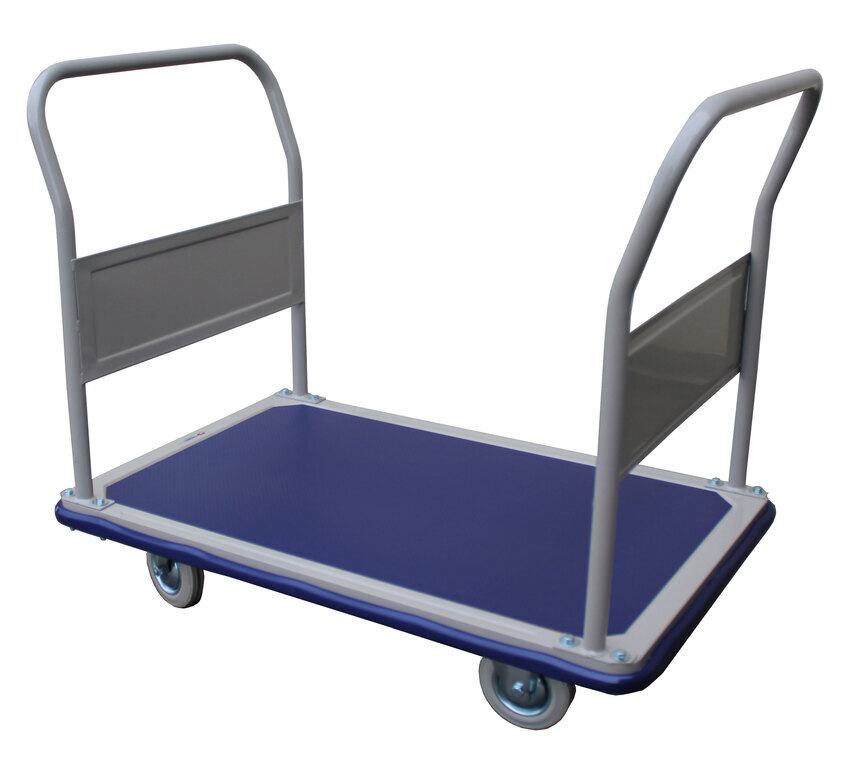
A proper handle design should encourage an upright posture for the operator with their elbows at a comfortable bend, rather than hunched over or hyperextended. Shelf spacing on the multi-tier trolleys should provide for the standard carton heights your facility is dealing with, or your staff will spend time jamming boxes into an awkward angle. And of course, wheel choice has a disproportionate effect on productivity. The castors are large-diameter, precision-bearing types that roll with less push force, glide effortlessly over rough concrete and expansion joints, and meow quietly indoors in retail environments.
Swivel castors at the handle end and fixed castors at the front make steering stable but lively feeling, while optional locking wheels allow the platform trolley Brisbane to be converted into an excellent platform for picking or assembly work. While individually each of these design elements may seem like a small detail, collectively they decide how smoothly, quickly and safely every load moves during the shift.
How to select the capacity load?
Selecting the correct load rating for a platform trolley is not purely structural engineering 101. Using overspecification will add confusion to the business thereby making it heavier and resulting in a higher buy price and higher push effort. Same goes for underspecification, mid-shift breakdowns, quick relabelled loads, and on-the-job injuries. You want the trolley safe working load to equal that maximum expected steady-state usage — day-to-day, week-to-week and maybe even month-to-month — but also add a safe buffer for infrequent peaks. It should calculate the not only total mass but also weight distribution.
A mass of fluffy but bulky foam boards stacked will have radically different deck size requirements than compact metal bits of the same weight. In a facility where product mix is highly varied, investing in two or three capacity classes (i.e., light-duty 150 kg units for small-parts picking, and heavy-duty 500 kg units for inbound bulk replenishment) provides flexibility, but avoids making every worker push an over-engineered behemoth around the floor. Additionally, define if the loads will static after placed, or move in-transit. A cage, or raised edge can prevent items from toppling, preventing damage and unanticipated delays when the item has a high centre-of-gravity. When managers size capacity correctly, they eliminate the invisible productivity loss that occurs when staff make additional trips because no appropriate trolley is available at the moment of need.
Staying Safe from Safety Ergonomics
In Australia, workplace health and safety (WHS) legislation appropriately places significant obligations on employers to provide equipment that is lower risk for musculoskeletal injury or disorder (MSD) development. In addition to compliance, ergonomic platform trolley design makes for active, injury-free staff which in turn drives productivity. The average adult can use the handle heights between 900 millimetres and 1100 millimetres, but where facilities have a diverse staffing profile, adjustment or different handle heights needs to be provided to reduce stooping by shorter operators and shoulder strain by the taller ones.
Comfort is improved during long runs with soft-touch grip sleeves push metal slipping during cooler climate runs Smooth wheel bearings are critical if push force is to be small initially; if they are not, staff need expend extra energy and fatigue sooner. The option for foot brakes lets the operator stabilise the trolley without leaning or bending, without having to move the spine out of alignment.